Your Cart

Pruning away damaged foliage is an important first step in reviving a stressed or struggling Calathea plant.
Water quality
The most common reason your Calathea’s leaves are turning brown on the edges could be due to your tap water. Tap water contains salts, chlorine, minerals and fluoride – all of which can build up in the soil of your plant causing the tips of the leaves to burn, turn brown, and curl up. One way you can remedy this is to use a water filtration system. If you do not have a filtration system available, leaving your water in an open container or sink overnight before using can help relieve some of the chlorine.
Increase the humidity
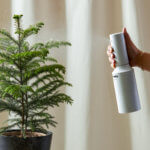
Your Calathea is a tropical plant, so it will thrive in more humid environments. Increase the humidity around your plant by misting the leaves regularly, using a pebble tray, or placing a humidifier nearby. For an easy boost, use our autonomous plant mister to mimic your Calathea’s leaves’ natural tropical environment.
Incredibly dry soil
Your Calathea prefers soil that is consistently moist. Be sure you’re not over or underwatering your plant. Keep a consistent watering schedule–water when the top 1”-2” of the soil is dry.
If you accidentally let your Calathea’s soil dry out completely, you may see leaves go limp, droop, and possibly start to brown and curl.If the soil is extremely dry all the way through the pot, a thorough soak is in order.
Here’s how to soak-water your Calathea:
Temperature
Make sure your plant is not in a drafty area or in the path of heating and cooling vents. Leaves will curl is the plant is cold, or excessively dry from constant airflow.
We're confident your Calathea will be back to normal in no-time, but if you've followed the steps above and things just aren't improving you can contact the Grow-How® Team.